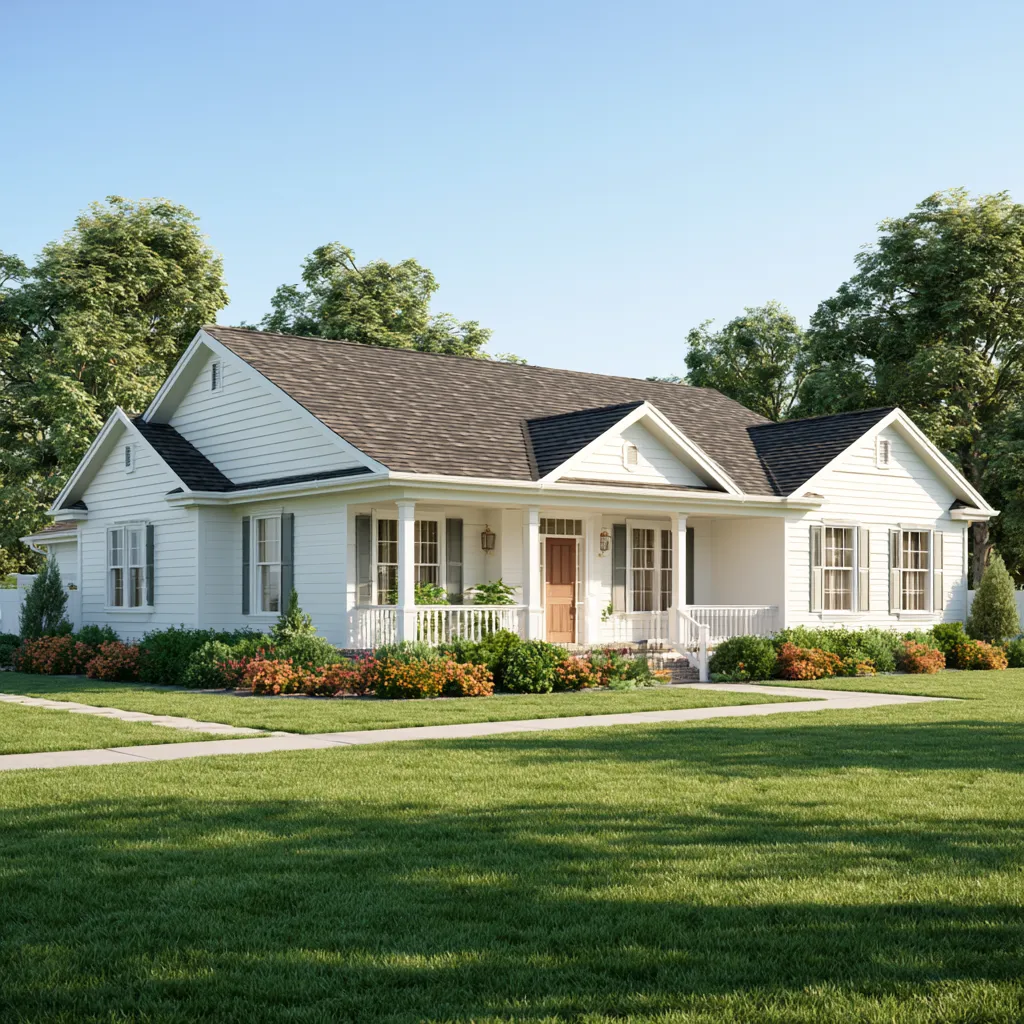
Frisco went from a small railroad town to a city of about two hundred thousand in the space of three decades. The census data still carries the fingerprint: in the 75034 ZIP area, about a third of the housing units went up in the 2000s alone, and the median build year is 2008. Cities that grow in a sprint get their bills in a sprint too. One of those bills is roofing, and it is coming due on whole neighborhoods at once.
The arithmetic nobody ran at closing
An architectural asphalt shingle carries a design life of roughly 25 to 30 years, spent a little faster by Texas sun and the occasional hail season. Put that against a build year in the 2000s and the math lands in the current decade: a roof installed in 2004 is past twenty years old now, and one from 2010 is closing on the age where inspections stop being optional.
Because subdivisions here were built in waves, the aging happens in waves too. When the first house on a street replaces its roof, it is rarely an outlier; it is a preview. The same shingle, installed the same summer, weathering the same storms, tends to fail on roughly the same schedule.
Why builder-grade matters twenty years later
Homes built during a construction boom were roofed under boom conditions: crews stretched thin, budgets tuned to the closing price, and materials chosen to meet code, which is a floor rather than a standard. None of that was scandalous, but it means many original roofs from that era started with the lightest permitted shingle over the thinnest permitted underlayment.
Twenty years on, the difference shows. A floor-spec roof at year twenty behaves like a mid-spec roof at year twenty-five, and Collin County hail does not grade on a curve. The county storm record has logged 24 hail days in four recent years, and older mats fracture under stones that a fresh field would shrug off.
How to read your own roof against the curve
Age is context, not a verdict. The verdict comes from the roof itself, and a few signals separate weathered-but-fine from actually-done:
- Granules collecting at downspout outlets after ordinary rain
- Shingle edges curling or corners cracking on the sun-facing slopes
- Bare patches where the mat shows black through the granule surface
- A repair history that keeps adding entries in new places
- Any interior stain, even one that seems to dry up between rains
The decision, made calmly
The wrong way to replace a roof is in a panic after a leak, or under pressure on a doorstep after a storm. The right way starts with a free, documented inspection: every slope photographed, a written verdict, and if replacement is actually close, an itemized figure you can sit with.
A roof that has a few seasons left should hear exactly that. One that is done should be priced from a parts list you can read. Either way, the neighborhood math says the question is worth asking a decade earlier than most owners get around to it. Still have questions about where your roof sits on the curve? Reach out and get the measured answer.